
Your way of working, written once, applied to every project.
A document comes back every week and always follows the same method? We write it down with you, wire your data, and measure the gain before and after.
Who it is for
To hand AI a task that keeps coming back, to your standards.
A report, a tracking sheet, a standard letter, a tender application: one document that keeps coming back and one real file are enough to start.
What is a skill?
Your method, written in plain language in a file.
The assistant rereads it on every project and applies it the same way. You stay in control: you can read it, correct it, let it evolve.
How we build one
We look at your process
A real project, start to finish, with the files you actually use.
We write the method
From your questions and your real files. What your documents cannot say, the skill asks.
We wire the data
Your shared drive, your mailbox, the exports from your business software: drawing, calculation, accounting.
We measure before and after
On a case whose answer you already know, to find out whether it can be trusted. For a tender analysis: we replay a consultation that has already been judged and compare, line by line, the skill’s table with yours.
Five examples
From the architecture practice to the back office of an engineering firm. For each: what goes in, what comes out, and what you keep in hand.
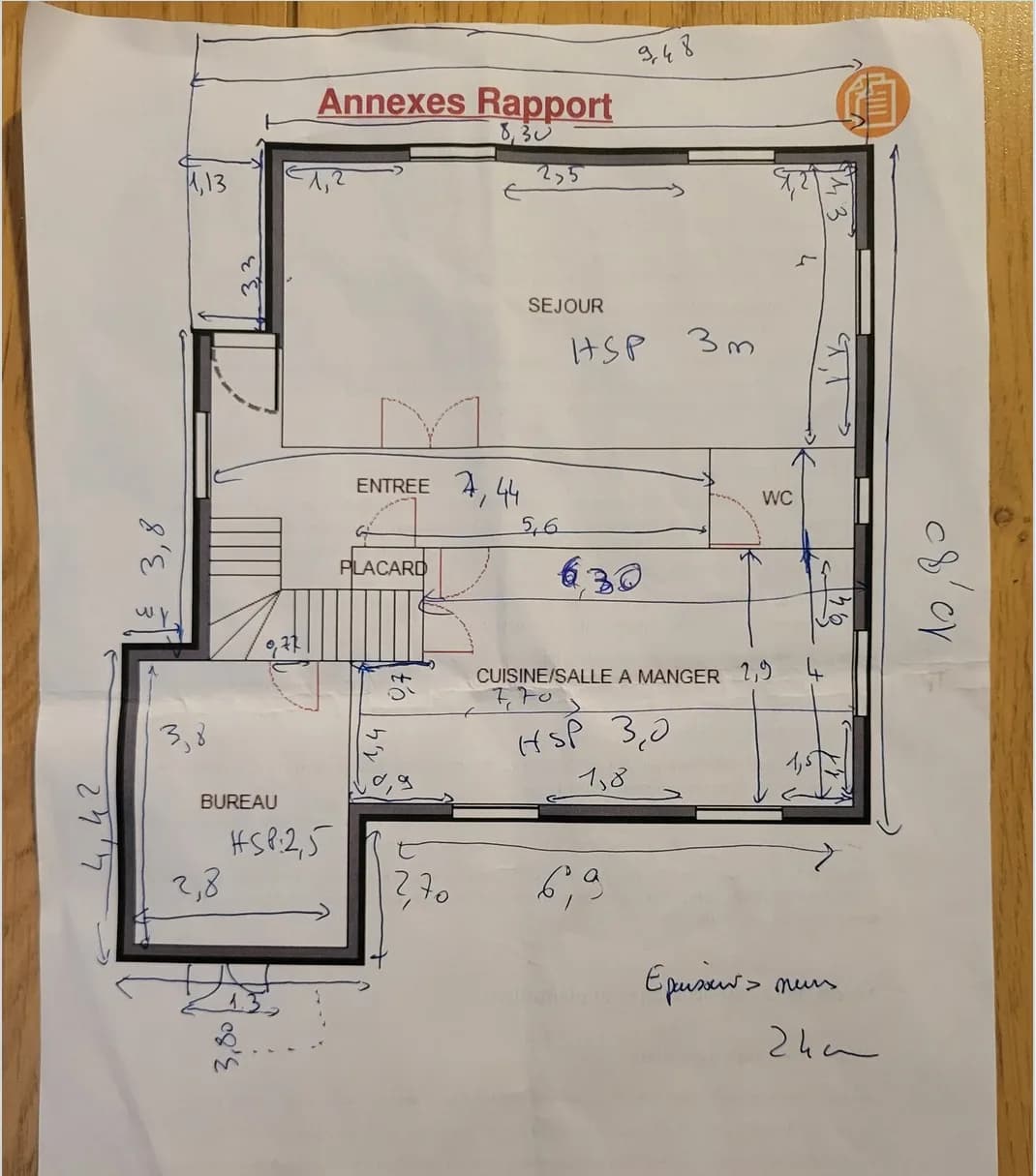
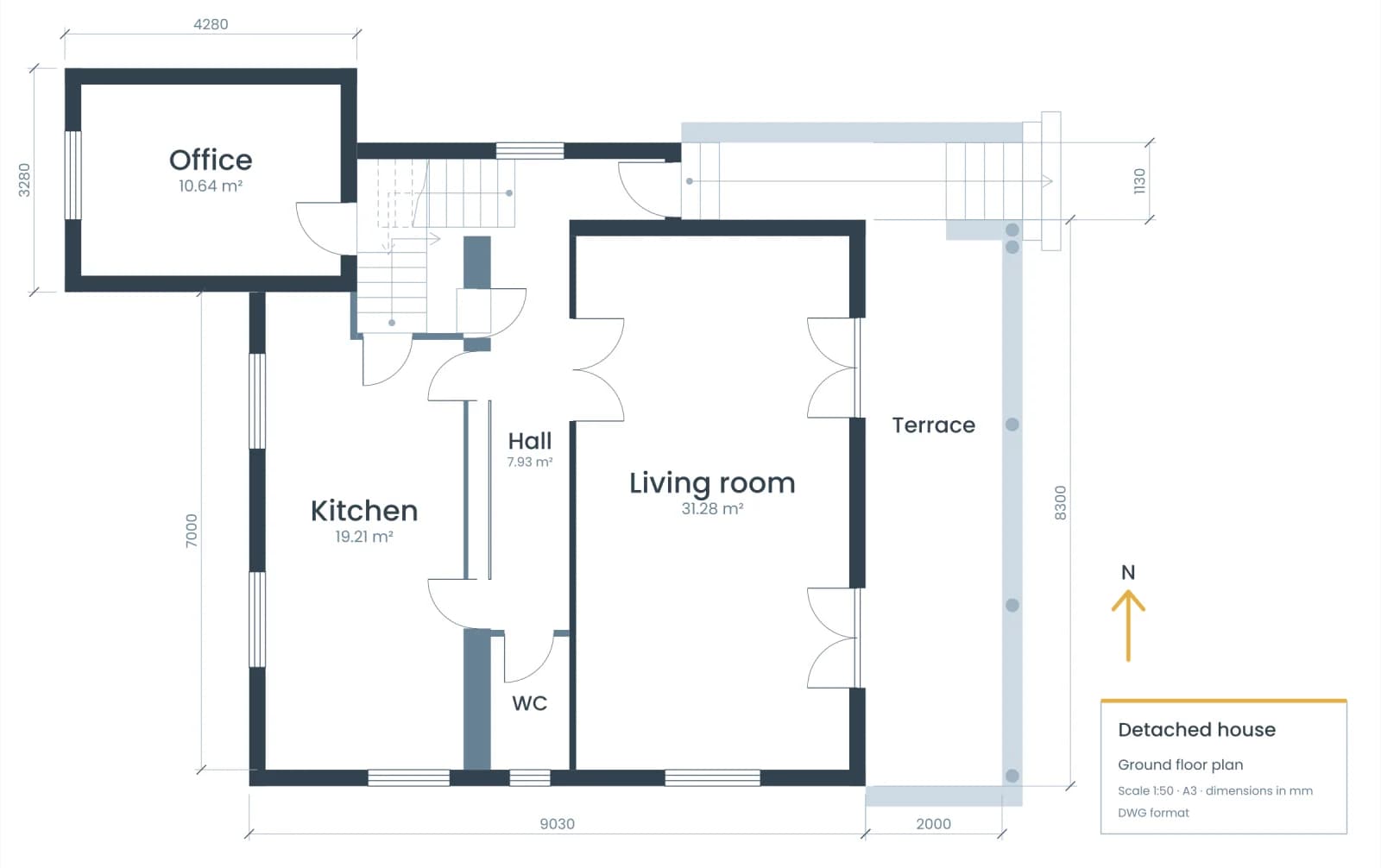
DWG plan from a sketch
Demonstration · a surveyor’s field sketch
- Input
- A sketch with hand-written dimensions and a few phone photos.
- Output
- A dimensioned 1:50 DWG plan, ready to open in AutoCAD.
- Your role
- When two dimensions contradict each other, the skill does not decide: it asks you, with the photo as evidence.
Specifications and written pieces
Delivered · architecture practice
- Input
- Your previous documents, the brief, your template.
- Output
- A specification or site minutes in the firm’s house style.
- Your role
- You read and sign off every lot.
Cost schedule from drawings
Delivered · architecture practice
- Input
- A DWG or DXF drawing.
- Output
- A priced cost schedule in seconds, with the source of every line.
- Your role
- If the drawing gives no number, the cell stays empty.
Bid analysis for project management (MOE)
Delivered · engineering firm
- Input
- The contractors’ bids received during the consultation, lot by lot.
- Output
- The three bids side by side in one Excel sheet, against the specification’s (CCTP) criteria, in seconds.
- Your role
- The AI strips the offers, you keep the judgement.
Letters, reminders and admin files
Admin team · engineering firm
- Input
- Your letter templates, your tracking sheet, the company documents: registration, certificates, references.
- Output
- The letter, the reminder or the tender application, ready to proofread, on your letterhead.
- Your role
- Nothing goes out without your review.
A case: an architecture practice’s cost schedule
From drawing to cost schedule in 2 seconds, checked on a case whose answer was known: 18 title blocks add up to 807 homes. The skill also noticed that the drawing and the cost schedule disagreed: 184 shutters priced, none drawn.
The skill starts from hypotheses. Here is what the validation call returned:
“Typical floors” drawn once = 3 levels
Confirmed
Surface = the outline of the hatch
Confirmed
Layer prefix = trade lot
Wrong: lots are decided later, the skill must ask
Also: inspection reports, from the site visit to the Word report, for a structural engineering firm.
See the track recordThe three rules
- Every figure has its source.
- If the source gives no number, the cell stays empty: the AI invents nothing.
- You validate before anything leaves.
Price
€4,000 – 8,000 excl. VAT
Fixed fee of 2 to 4 days of work, spread over 2 to 4 weeks. Audit of your files included.
The price depends on the number of sources to wire and the room left for validation. It is fixed by quote before we start.
How skills read your software
Through their exports: DXF, IFC, CSV, Excel, rather than by driving AutoCAD or your calculation tools live.
After delivery
The skill belongs to you: a file in plain language that your team reads and edits, with no Blue Green server involved. When the format of your tenders changes, a half-day of follow-up (€600 excl. VAT) puts it right again. The skill is a documented file in plain language that any other provider can pick up.
Your data
Where it goes, and what never goes in.
- Claude is a service from Anthropic, a US company. What you enter is processed on its servers under a professional licence: no training, GDPR data-processing agreement.
- Professional licence: your exchanges are not used to train the models.
- GDPR data-processing agreement with the provider.
- Three categories of data never entered: sensitive data, credentials and payments, trade secrets.
- Pseudonymisation as soon as possible.

A task that comes back every week? Bring it.
Thirty minutes on a real file is enough to say whether a skill is the right answer.